Everyone assumes a dead animal smell means something is in the roof. In older Melbourne homes it is often the opposite — the animal is underneath you, and almost everything about getting it out is different.
Why subfloor jobs are their own category
- The odour rises through floorboards and skirting gaps, so it appears in the rooms directly above rather than at ceiling level.
- If the house has underfloor ducted heating, the smell can be distributed through the entire home the moment the system runs.
- Decomposition fluid soaks into soil, not insulation. Removing the carcass alone often does not remove the smell.
- Access is a confined space problem — crawl height, asbestos in pre-1985 homes, and redback spiders are all real constraints.
Why so many Melbourne homes have a subfloor at all
Melbourne’s older housing stock — the weatherboard and brick-veneer homes that dominate the south-east — is largely built on stumps or piers with a ventilated cavity underneath. That void typically offers somewhere between 300 and 600 millimetres of clearance, is open to the outside through subfloor vents, and is dark, sheltered and dry.
From a rodent’s point of view that is close to ideal. From a removal point of view it is a low, dark, awkward space that a person can barely move through.
Newer homes on concrete slabs have no subfloor at all. If you live on a slab and you can smell something, the animal is in a wall cavity, the roof, or a duct — and that is a different problem again.
Roof versus subfloor: what actually changes
| Factor | Roof cavity | Subfloor |
|---|---|---|
| Odour travel | Downward through downlights and cornice gaps | Upward through floorboards, skirting gaps and service penetrations |
| Where you smell it | Strongest at ceiling level | Strongest at floor level — often noticed by children and pets first |
| What absorbs the fluid | Insulation batts and plasterboard | Bare soil, plus bearers and joists |
| Can contaminated material be removed? | Yes — batts are lifted out and replaced | Soil must be excavated and removed. It cannot simply be cleaned |
| Access | Manhole, standing or crouching height | External hatch or vent. Crawling only, sometimes on the stomach |
| Ventilation | Usually good — roof spaces breathe | Often poor. Blocked vents trap odour for months |
| Main hazard | Falling through the ceiling; heat | Confined space, asbestos, spiders, live wiring |
| Species typically found | Black rats, brushtail possums, mice | Brown rats, cats, occasionally possums |
The ducted heating problem
This is the detail that catches Melbourne homeowners out, and it is worth understanding before you spend money chasing the smell around the house.
A large share of Melbourne homes run underfloor ducted gas heating, with flexible ducting and a return-air path running through the subfloor void. If an animal dies near that ducting — or worse, gets inside a damaged duct — the heating system becomes a distribution network for the odour. Turn the heater on and every vent in the house delivers it simultaneously.
If the smell is roughly uniform in every room and gets dramatically worse within minutes of the heating starting, stop looking for a single hot spot in the ceiling. That pattern points to the subfloor and the duct run, not the roof.
Turn the heating off entirely until the source is found. Running it circulates contaminated air and, if a carcass is inside the ductwork, deposits residue through the whole system.
Where the smell appears tells you where the animal is
Odour concentration by height in the room, for the three common source locations.
What actually dies under a house
| Animal | How common | What it means for the job |
|---|---|---|
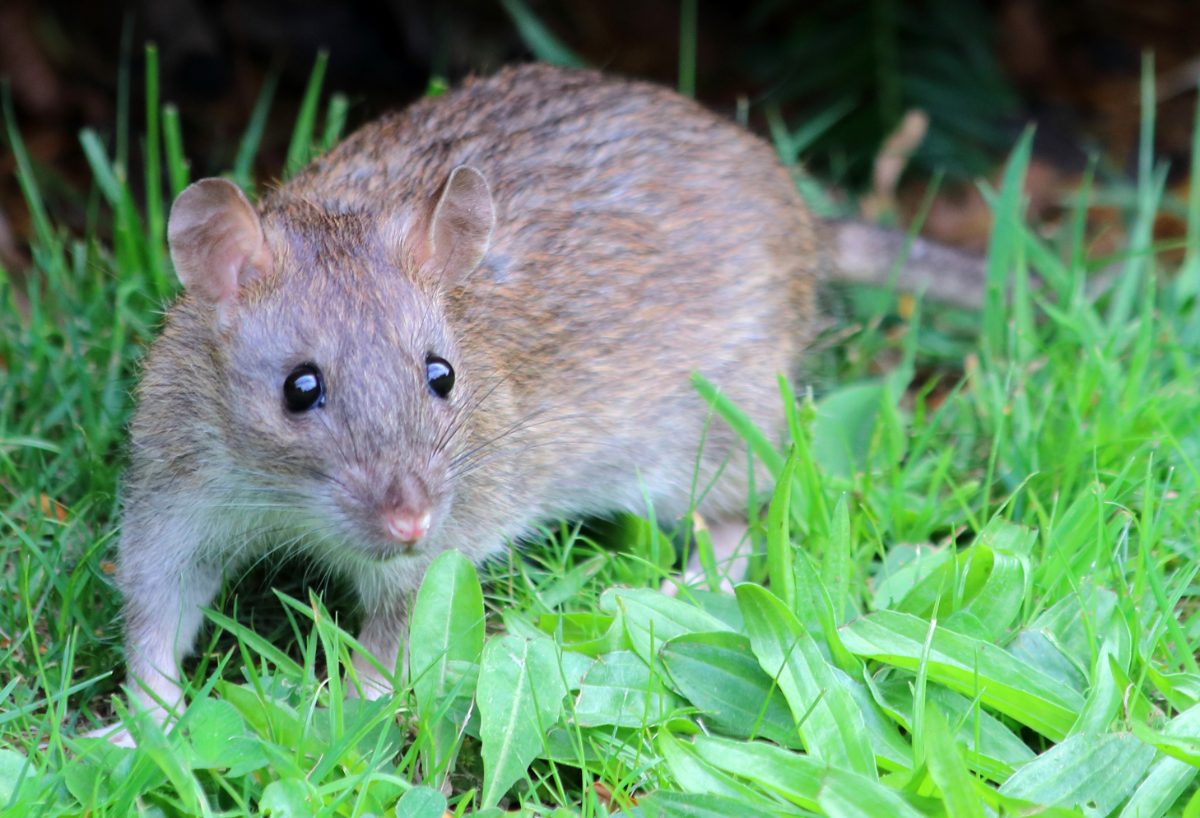
| Brown rat | Most common | Ground-dwelling burrower, poor climber. The subfloor is its natural habitat. Often dies near moisture after baiting |
| Cat | Common | Enters through an open vent chasing rodents and cannot find the way out. Large body mass means a long, intense odour |
| Brushtail possum | Occasional | Usually a roof dweller, but will use a subfloor. Around 2.8 kg, so odour persists for many weeks |
| Black rat | Occasional | Prefers roofs but passes through subfloors. Smaller, shorter odour period |
| Mouse | Frequent, rarely noticed | At 20 grams a single mouse seldom produces a whole-house smell. Multiple deaths after baiting can |
The part most people miss: the soil
In a roof, decomposition fluid soaks into insulation batts, and you throw the batts away. In a subfloor there are usually no batts. The fluid goes into bare earth.
Soil holds odour compounds for a very long time. This is why homeowners routinely report that they found and removed the animal, and the smell barely improved. The carcass was the source; the ground beneath it is now the reservoir.
Proper remediation means excavating and removing the contaminated soil to a reasonable depth, treating the excavation with an enzyme-based product that digests residue rather than masking it, and restoring subfloor ventilation so the space can dry and breathe. Spraying deodoriser over contaminated earth achieves a few days of relief and nothing more.
Access and safety: the genuine constraints
It is a confined space
Restricted entry and exit, limited air movement, and no easy way to get help to you. Never enter a subfloor alone without someone outside who knows you are in there.
Asbestos in older homes
Melbourne homes built before the mid-1980s may have asbestos in pipe lagging, sheeting or debris left under the floor. Do not disturb unidentified material — get it assessed.
Redback spiders
Dark, dry, undisturbed subfloors are prime redback habitat in Victoria. Long sleeves, gloves and a good torch are the minimum.
Live wiring and gas lines
Subfloors carry electrical runs, gas piping and plumbing, frequently unprotected and sometimes decades old. Crawling blind through them is how people get hurt.
If the crawl height is under about 400 mm, if you cannot see the far side with a torch, if there is standing water, or if there is any material you suspect might contain asbestos — do not go in. These are the exact conditions professional operators are equipped and insured for, and the exact conditions that produce serious injuries for homeowners.
A sensible sequence
If you suspect a subfloor carcass, work through it in this order. Turn off any ducted heating immediately. Check whether the odour is floor-level or uniform, since that distinguishes a void source from a duct source. Walk the exterior and inspect every subfloor vent for damage, gaps or an obvious entry point. Look for blowfly activity around vents and skirting gaps, which will usually indicate the general position. Only then consider access — and only if the space is genuinely safe to enter.
Beyond that point the work involves confined-space entry, carcass removal, soil excavation, enzyme treatment and restoring ventilation. It is the reason households across Melbourne’s south-east generally engage a technician for dead animal removal in Narre Warren and surrounding suburbs rather than attempting a subfloor entry themselves — the removal is rarely the hard part, and the contaminated ground almost always is.
Frequently asked questions
How can I tell if it is in the subfloor rather than the roof?
Odour direction is the clearest signal. Subfloor smells are strongest at floor level and near skirting boards, and are often noticed first by children and pets. Roof smells are strongest at ceiling height and around downlights. If the smell is uniform in every room and worsens when the heating runs, suspect the subfloor ducting.
Why does the smell remain after the animal was removed?
Because the soil beneath it absorbed the decomposition fluid. Bare earth holds odour compounds for a long time, and no amount of surface deodoriser fixes it. The contaminated soil has to be excavated and the area treated.
Can I just seal the subfloor vents to stop the smell?
That makes it worse. Subfloor vents exist to keep the space dry and ventilated. Blocking them traps the odour, raises moisture levels and creates conditions for rot and mould. Ventilation should be restored, not removed.
How long will a subfloor smell last untreated?
Longer than the equivalent in a roof, because subfloors are cooler and less ventilated. A brown rat may take three to four weeks; a cat or possum can persist for two months or more, and contaminated soil extends it well beyond the point the body has dried out.
Should I turn off my ducted heating?
Yes, until the source is located. Running the system circulates contaminated air through the whole house and, if the carcass is in or against ductwork, deposits residue inside the ducting, which then needs cleaning as a separate job.
My house is on a concrete slab. Where else could it be?
With no subfloor void, the likely locations are a wall cavity, the roof space, or inside ducting. Wall cavities are the most difficult, since access usually means removing a section of plasterboard once the position has been narrowed down.
- Species habitat preference: Rattus norvegicus as a ground-dwelling burrower versus Rattus rattus as an arboreal climber.
- Asbestos in Australian residential construction — materials commonly present in homes built before the mid-1980s.
- Subfloor ventilation requirements and the role of ventilation in moisture and odour control.
- Clearance and timeline figures are indicative and vary by property age, construction type and climate.